
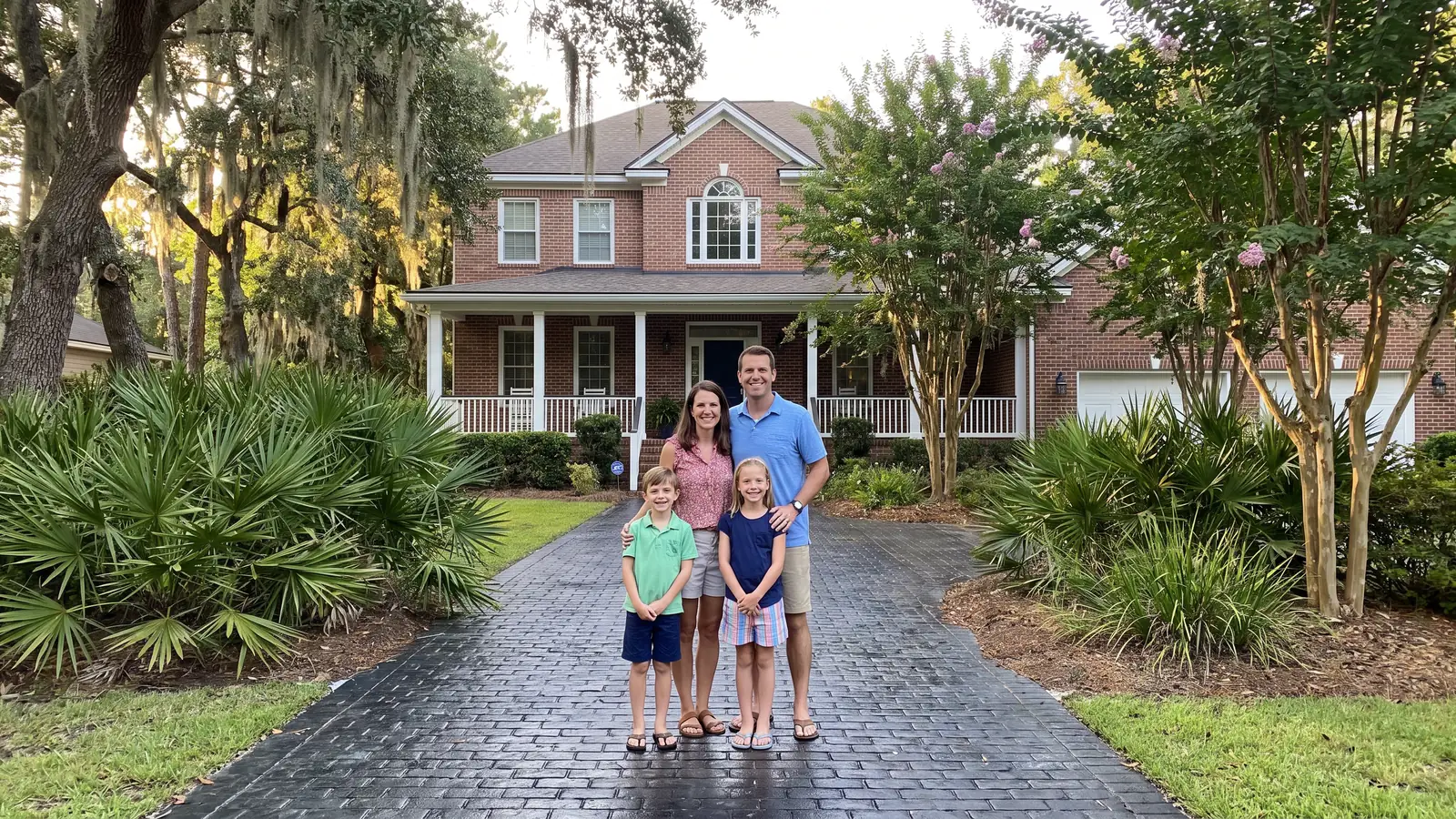
Paver sealing for Highlands homes
Paver Sealing in Highlands, FL
Highlands homes have a median build year of 1957, so call (912) 600-8118 to ask about pavers added since.
- Brings out deeper paver color
- Fresh joint sand helps lock pavers in place
- Gives weeds less room to grow
- Makes the surface easier to keep clean
- Free estimate, no obligation
Request a Free Estimate
Free, no obligation.
Fast, careful paver sealing in Highlands
Paver sealing in Highlands starts with a free estimate from a local contractor, whether the pavers are a driveway, a walkway or a back patio. Once you ask for a free estimate, expect a reply within 1 business day, and often well before that. The estimate carries no obligation.
Think about the driveway you turn into when you get home from work. The color has gone chalky, the joints have thinned, and a few weeds have found the gaps. Clean it, re-sand it and seal it, and the drive goes back to a single steady color. If you would rather talk before anything else, (912) 600-8118 is the number to call.
Why hire a local paver sealing contractor in Highlands?
Most Highlands houses are older single-family homes, so the pavers in front of them are often newer than the house and carry a history nobody wrote down. A local contractor asks about that history first, and you can ask for a free estimate to start that talk.
A free look, no pressure
The contractor looks at your Highlands pavers and quotes a price before anything starts. The estimate is free and you owe nothing for asking.
A range to check against
Published prices around Northeast Florida run $1.75 to $3.25 per square foot to clean, sand and seal. Compare any Highlands quote to that range.
A finish for a 1950s street
Matte keeps pavers calm beside a mid-century house. A wet look adds shine but shows scuffs sooner, so pick with your daily tires in mind.
You make the call
You pick the date, the finish and whether to go ahead. A Highlands estimate carries no obligation at all.
Get Your Free Estimate in Highlands
Tell us about your pavers in Highlands.
Free, no obligation
What paver problems show up most in Highlands?
Tight turns on a short drive
The median living area on one Highlands home-value page is 1,354 square feet. That is a smaller house, so the drive may leave little room to swing a car. A Jacksonville paver company says a driveway carries a few tons every time a car pulls in, and that weight and turning tires loosen joint sand. On a short drive, every turn lands in the same few feet, so the joints near the garage and the street thin out first. Re-sanding before sealing puts that lost support back where the weight lands.
Rain, not river water, is the main worry
Lots set back from the Trout River face less river flooding than lots beside it. Rain is the bigger force. Jacksonville gets about 52 inches a year, much of it in short, hard summer storms, and those storms flush sand out of unsealed joints. Once a joint is open, soil can settle in and weeds follow, which is why a Highlands homeowner may pull the same weeds every spring.
Color gone flat in open sun
A Jacksonville paver company says the sun fades unsealed concrete pavers noticeably within three to five years. Highlands homes were built from 1946 to 2022, so many pavers here have spent a long time in that sun. Flat, chalky color is the sign. A new coat helps hold the pigment, which means a cleaner, more even surface for the next few years. Matching joint sand adds to the even look.
Orange lines by the garage door
UF/IFAS says Florida well water is mostly high in iron, and that watering with it leaves orange streaks. If your Highlands sprinklers run from a well, look along the garage wall and the walkway for rust-colored arcs. Treat those marks before sealing, because a coat over them would seal the stain in. Many lighten a lot, though some deep stains do not come out fully. Aiming a sprinkler head off the pavers keeps fresh rust from landing there.
A coat from a past owner
Highlands has homes from the 1940s on, with a median build year of 1957, so a driveway may have changed hands since the pavers went in. A past owner may have used a product no one can name. The catch is that a water-based product cannot go over a solvent-based one, so guessing is risky. Ask the owner before you, if you can reach them. The contractor works out what is already down before choosing what goes on top. A patchy or peeling coat is a clue that the old product needs attention first.
Do older Highlands streets need a different plan than newer ones?
Do home ages change the plan?
A little, because Highlands mixes decades. One home-value page counts 435 homes in East Highlands, all single-family, built between 1946 and 2022. Older houses often carry pavers added later, while newer ones may have pavers from the builder. Tell the contractor roughly when your house was built when you ask for a free estimate, since that hints at how many owners the driveway has had.
Which Highlands streets come up most?
Streets named on that page include Monaco Drive, De Paul Drive and Pheasant Drive. Another page lists Highlands homes from 1953 to 1970 near Tulsa Road and Loyola Drive North. Jacksonville International Airport opened on September 1, 1968, and the Northside joined the city that same year. About 67 percent of occupied homes in ZIP 32218 are owner-occupied, so most jobs here are one homeowner deciding about one driveway, and you can call (912) 600-8118 and name your street.
How does Dunn Avenue traffic matter?
Dunn Avenue is the road most people use to find Highlands. Busy corners can limit where a work truck parks. Tell the contractor if your drive sits close to one, then ask for a free estimate.
What does paver sealing cost in Highlands?
What do published prices run?
Around Northeast Florida, published prices run $1.75 to $3.25 per square foot for a clean, sand and seal. One Jacksonville cost guide notes that small projects often run higher per square foot, which can matter on a short Highlands drive. Old sealer that has failed must be stripped first, and that sits higher in price. For a number for your pavers, ask for a free estimate, and the estimate is free.
Does a bigger job cost less per foot?
A larger project often earns a better per-square-foot rate, one Jacksonville guide says. So ask about the walkway and the patio while the contractor is already on your lot. Call (912) 600-8118 and ask what is worth adding.
| Paved area | Typical example | Clean, sand and seal |
|---|---|---|
| 300 sq ft | Small patio or walkway | $525 to $975 |
| 600 sq ft | Two car driveway | $1,050 to $1,950 |
| 1,000 sq ft | Large driveway or pool deck | $1,750 to $3,250 |
| 1,500 sq ft | Driveway plus pool deck | $2,625 to $4,875 |
Math based on the $1.75 to $3.25 per square foot that Northeast Florida paver companies publish. Your contractor sets the actual price after seeing the surface. Repairs, leveling and stripping failed sealer are usually extra.
How does a paver sealing job work in Highlands?
Walk the lot and read the surface
The contractor walks your Highlands drive and notes where it dips, where the edges drift and where the sprinklers hit it. Sunken or lifted pavers get reset first, because sealing over a dip only keeps the dip. Stains and any old coat are checked at this stage too. Mention anything you know about earlier sealing, such as a past owner's receipt or a product name on a leftover bucket.
Wash away the gray film
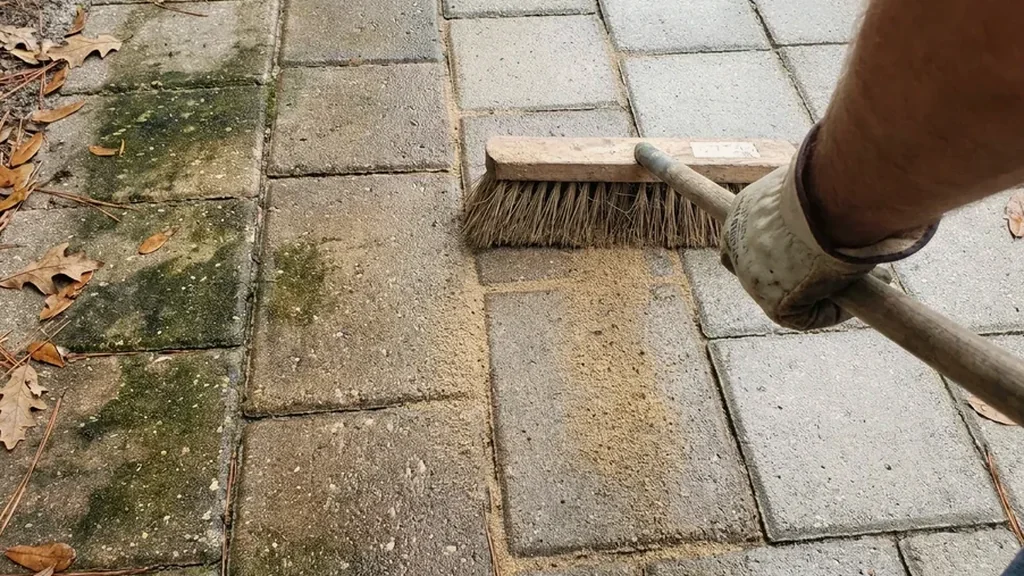
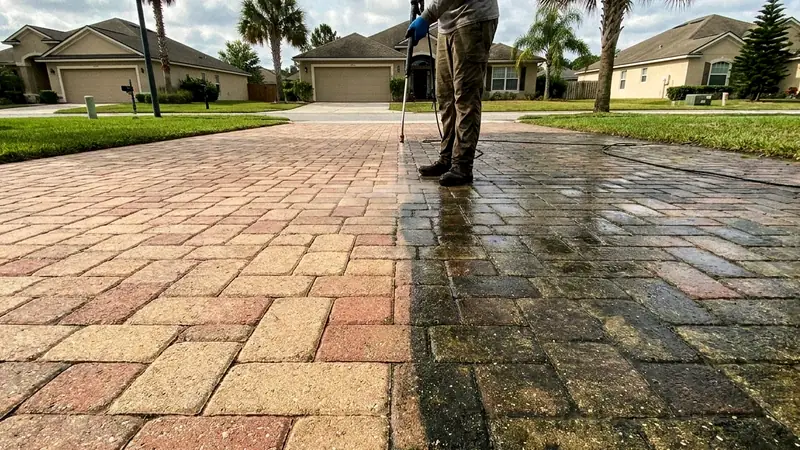
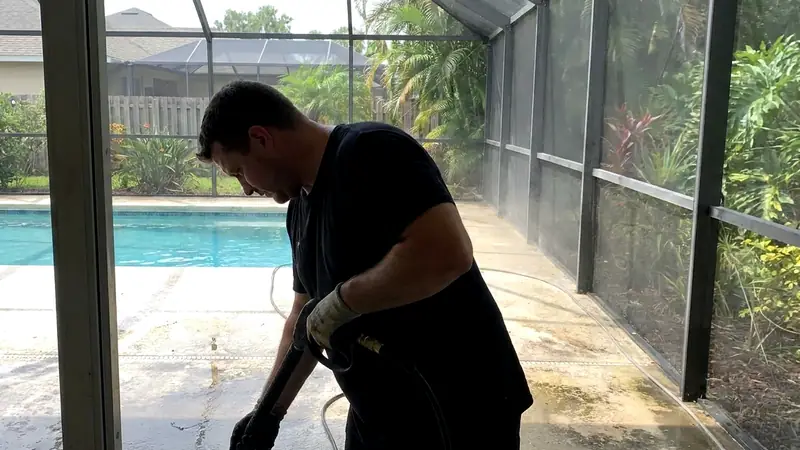
Next comes the wash. It clears the gray film, mildew in shady strips and the grit that settles on an older drive. Spots of oil and rust are treated ahead of time, and most fade a good deal. Washing also pulls sand out of the joints, so the contractor plans to replace it. Care is taken near the house walls and the garage door, so rinse water does not run where it should not. A Jacksonville paver company also warns that high-pressure washing can loosen joints, so a gentler setting is worth asking about.
Fill every joint with fresh sand
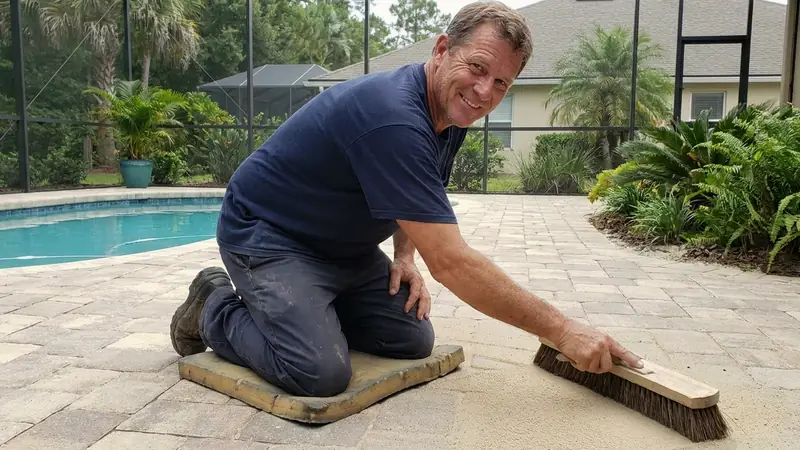
Fresh sand goes back into each joint and is swept in until the surface is full. One Northeast Florida company says sealer stabilizes joint sand to limit washout and weeds, and that a matching sand color helps the surface look clean and solid. Full joints give summer storms less to carry off. Expect this step to take longer if the joints have been low for years.
Allow the surface to dry out
Sealer needs a dry surface, and one trade bulletin asks for about 24 hours to dry after cleaning or rain. After a wash, a Highlands drive in full sun dries sooner than a shaded walkway, and a careful contractor checks both before starting. Rain in the forecast moves the job. A Jacksonville company says sealing damp pavers can leave a white, cloudy look, so patience here pays off.
Spray, roll and set the finish
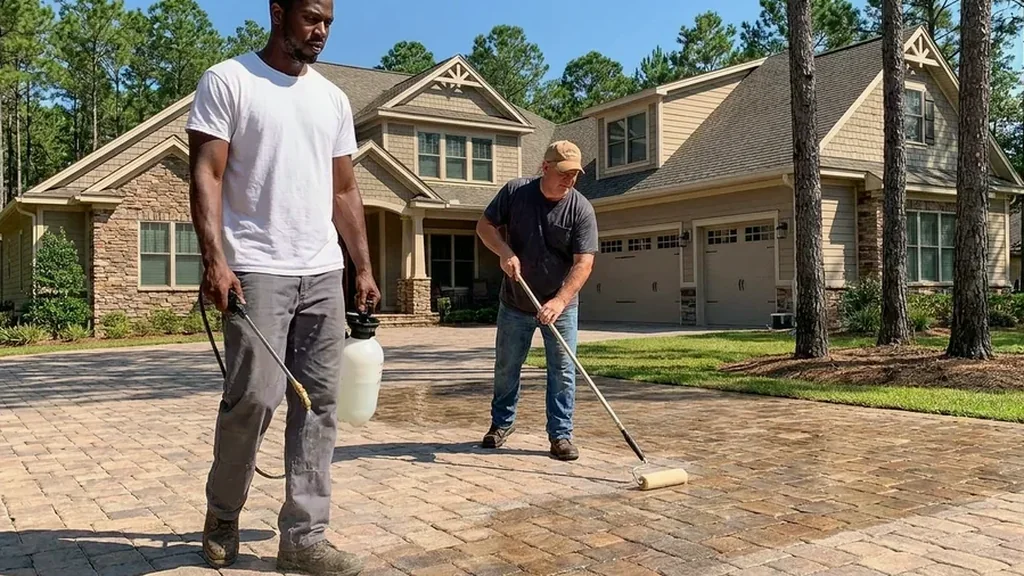
The sealer is sprayed on and then back-rolled so it reaches the joints. Two to five years between coats is what companies commonly quote, though a wet look shows scuffs sooner than matte. One Jacksonville company says people can usually walk on it within a few hours and cars should stay off for about a day. Ask which timing applies to the product you choose, and park the cars on the street until the time is up.
Complete paver services in Highlands
What are the four stages of a driveway job?
Expect four stages on a Highlands driveway. First the pavers get washed, then the joints get fresh sand, and then the surface has to dry. The sealer goes on at the end, when nothing dirty is left to trap. Call (912) 600-8118 and ask how many hours your lot would take.
Which surfaces wear out first?
Driveways take the weight, so they wear first. Walkways beside older Highlands houses see feet and sprinkler spray, and the shaded ones go green first. A back patio gets sun and the odd spill. Say which of these you have when you ask for a free estimate, and the contractor can plan the wash for each.
Which sealer type fits an old coat?
Two families of sealer are sold, water-based and solvent-based. A water-based coat cannot go over a solvent-based one, so the old coat sets your options. Matte looks natural beside a mid-century front, and a wet look shows scuffs sooner. Call (912) 600-8118 to talk through the finish.
When is a good time to seal?
Fall after hurricane season and spring before the summer humidity are both good sealing windows, one Jacksonville cost guide says. Jacksonville gets most of its rain from May to September, so a Highlands job can slide a day or two when a storm rolls through. The driest stretch runs from November to April, and the contractor will wait for a dry surface in any month. To ask about dates, ask for a free estimate.
Questions to ask before you hire
- Will you cover my plants and shield the siding and the screen enclosure?
- Can you send proof of insurance before the work day?
- Do you charge by the square foot or give one price for the whole area?
- How long should the pavers dry before the sealer goes on?
- Will you walk the finished job with me before I pay?
- Will you fill the low spots and the gaps where the joint sand washed out?
- Can you deal with the green algae and the dark stains under my live oaks?
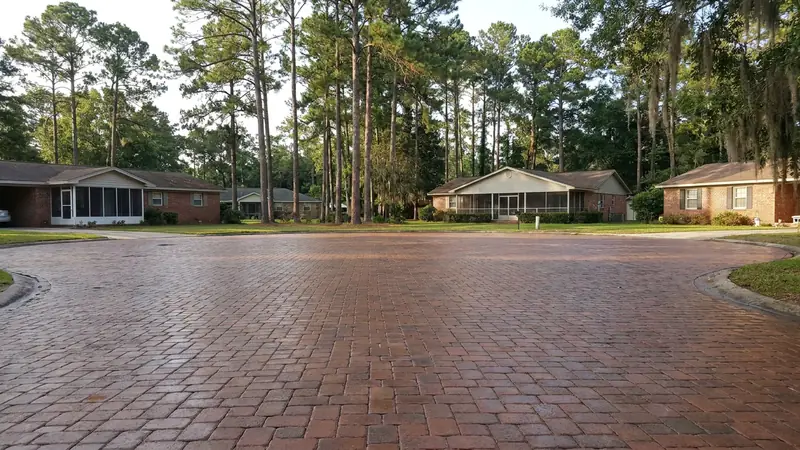
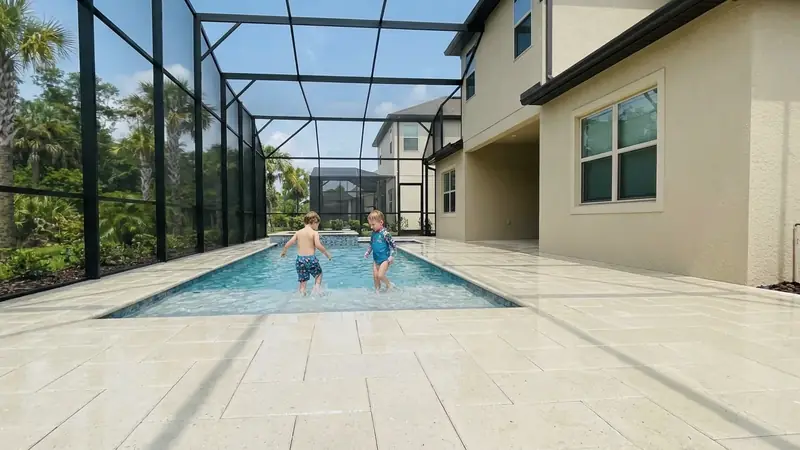
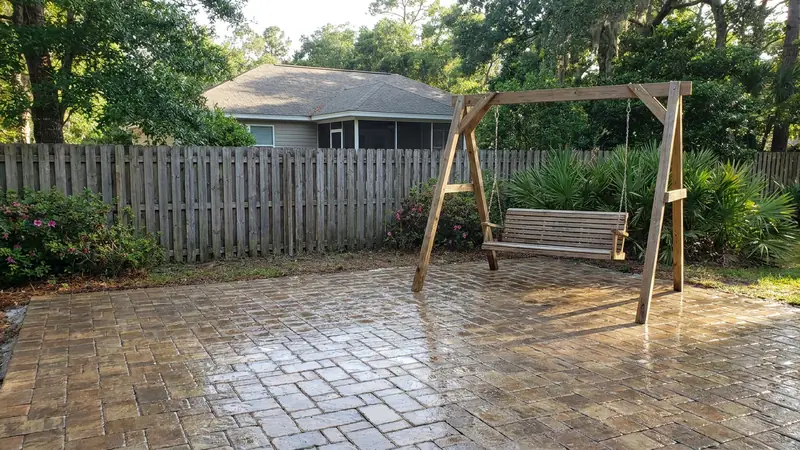
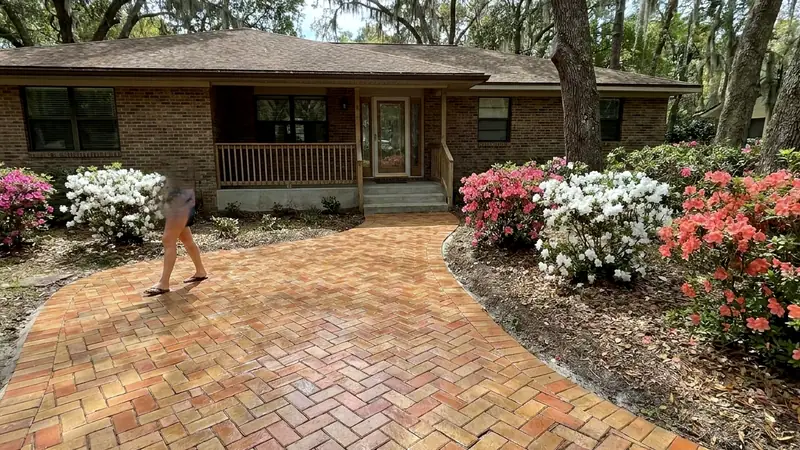
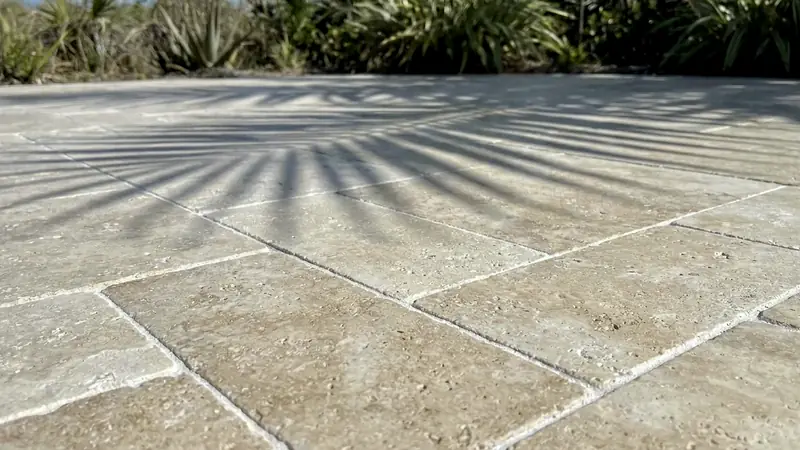
What do sealed pavers look like around Highlands?
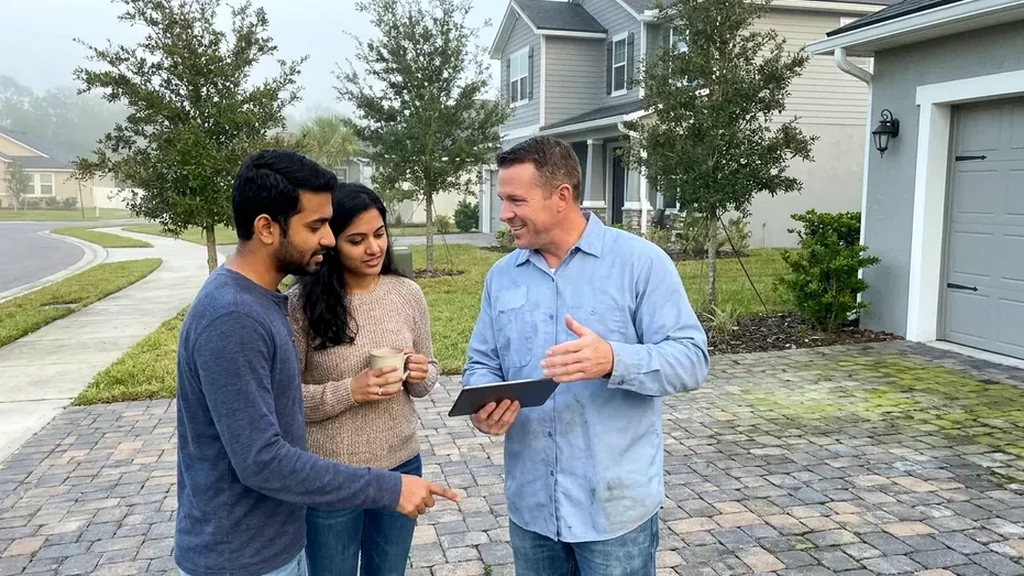
Why local matters in Highlands
Why does the size of Highlands matter?
ZIP 32218 covers about 97 square miles of land and holds 67,040 people, so Highlands is a wide area. A contractor who works the Northside will ask which part of it your street is in. That question shapes the plan, since homes here run from the 1940s to 2022 and the pavers around them vary just as much. To talk with a contractor who covers the Northside, call (912) 600-8118.
Why does the local sand matter?
Local knowledge shows up in the sand, and the sand shows up in your joints. The USDA describes the Mandarin soil series, first set up in Duval County, as somewhat poorly drained fine sand with a seasonal high water table 18 to 42 inches down. Sandy ground plus 52 inches of rain a year explains why joint sand keeps moving. You can ask for a free estimate and ask how the contractor deals with it.
Who makes the call on your pavers?
About 67 percent of occupied homes in the ZIP are owner-occupied, so you are usually the one deciding. Ask the contractor for a start time and how long the drive will be off limits. Then ask for a free estimate and set a day that fits your week.
What places help a contractor find my street in Highlands?
Which landmarks help a contractor find you?
Most people place Highlands by Dunn Avenue. Highlands Regional Library sits at 1826 Dunn Avenue and has meeting rooms people use all year, and the North Campus of Florida State College at Jacksonville was established off Dunn Avenue near I-295 in 1970. The North Campus of Florida State College at Jacksonville opened in 1970 off Dunn Avenue near I-295. Mention the closer one when you ask for a free estimate, and a contractor can find your street faster.
What lies farther out from Dunn Avenue?
Farther out are Ray Greene Park on Leonid Road, which opened in 1957, and Jacksonville Zoo and Gardens where the Trout River meets the St. Johns. Jacksonville International Airport, which opened in 1968, shares the Northside with Highlands. Ray Greene Park, on Leonid Road in the Highlands section, opened in 1957. When one of those is close to you, call (912) 600-8118 and mention it.
Frequently Asked Questions
Is it good to seal pavers in Highlands?
Yes. On Highlands pavers, sealer's main jobs are holding color and keeping joint sand where it belongs. A Jacksonville paver company says the sun fades unsealed concrete pavers within three to five years and summer storms flush sand from open joints. The coat wears out eventually, so expect to redo it down the road.
Can a contractor clean, sand and seal my Highlands pavers in one visit?
Often, yes. A Jacksonville company says most of its driveways are cleaned, sanded and sealed in a single day. A big patio, heavy stains or a wet forecast can stretch the job, so ask what would push yours into a second day.
What is the average cost to seal pavers in Highlands?
Expect $1.75 to $3.25 per square foot for the full clean, sand and seal, which is the range Northeast Florida companies commonly publish. A short drive can run higher per square foot, and failed old sealer sits higher still. Have the total area written on the quote, so two bids line up.
Is it better to spray or roll paver sealer in Highlands?
Many Jacksonville companies do both. One says crews spray the sealer and then back-roll it so it reaches into the joints and does not pool. Ask the contractor to describe the method on your Highlands drive, since either way the goal is an even coat.
How often do pavers in Highlands need a new coat?
Expect a coat to last somewhere between two and five years, going by what companies quote. A drive in full sun with daily tires belongs near the short end, and some Jacksonville companies put full-sun driveways nearer two. Water that beads on the surface says the coat still works; water that soaks in says it is spent.
How soon can I drive on my Highlands pavers after sealing?
One Jacksonville company says feet are usually fine in a few hours, but cars should wait about a day. A second company gives 2 to 4 hours for feet and 24 hours for cars. Park on the street the night before and the night after.
Will sealing fix sunken pavers in Highlands?
No, a sunken paver has to be reset before any sealer goes down. A Jacksonville company says low or lifted sections are reset first, since a coat over a dip only preserves it. Point out low spots at the first visit, and the contractor can say whether a reset is needed.
Can new sealer go over an old coat on my Highlands driveway?
Sometimes. Water-based and solvent-based sealers do not stack, so the contractor must find out what is already down. On an older Highlands house you may not know who sealed the pavers last. Keep any receipts or product names you find, since they can settle it in minutes.
Nearby areas we serve
Ready for a Free Estimate in Highlands?
Call (912) 600-8118 and tell us about your pavers.
Free, no obligation